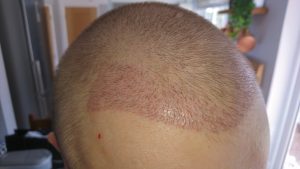

Have you ever undergone intense periods of anxiety and stress, noticing a loss in your hair’s thickness? This extreme form of anxiety is commonly described as a mental breakdown.
Yes, you can experience hair loss if you have a nervous breakdown or experience prolonged acute stress. Alopecia areata is commonplace after a nervous breakdown, and you could lose hair in patches or all over your head and body.
Hair loss due to stress and anxiety
Stress and anxiety can cause hair loss in several ways. One way is through a condition called telogen effluvium, which is a temporary hair loss condition that can occur due to a physical or emotional stressor.
When a person experiences a significant amount of stress or anxiety, it can cause a significant number of hair follicles to enter into a “resting” phase, which is called telogen phase.
As a result, the hair falls out more easily and the growth of new hair is slowed down, leading to hair loss. This type of hair loss usually occurs about 2-3 months after the stressor occurred and can last for several months.
Another way stress and anxiety can cause hair loss is through a condition called trichotillomania, which is a compulsive disorder characterized by the recurrent pulling out of one’s own hair. People with this condition may pull out their hair from their scalp, eyebrows, eyelashes, or other areas of their body. The hair pulling behavior is often associated with stress and anxiety.
It’s worth noting that hair loss can have many causes, and it’s important to consult with a healthcare professional to determine the underlying cause of the hair loss and the best course of treatment.
Will hair loss from anxiety grow back?
Anxiety and hair loss have a complicated relationship, but in most instances, you can see your hair start to grow back when you have your anxiety under control.
Our adrenal glands were never meant to cope with constant stress and anxiety. As a consequence, you can have high levels of cortisol and adrenaline in your body for months and years if you can’t learn how to control your anxiety.
Cortisol and adrenaline are two hormones created by the adrenals when we are exposed to anxiety and stress.
However, the adrenals placed on top of each kidney do not have an on-off switch and can produce constant amounts of both hormones.
There is one little known fact about the fight and flight hormones. Cortisol switches off T-cells, temporarily exposing the immune system to be attached by any pathogen around.
Worse still, while the T-cells (t-cells kill off bacteria and germs that enter our body, the first line of defence) are not working, your autoimmune system can wreak havoc.
One profound effect is alopecia areata, an autoimmune system response that causes your hair to fall out. Sometimes you lose individual hairs, or your hair can come out in large clumps.
Alopecia areata can be very distressing for the individual experiencing losing hair in this way.
Telogen effluvium is a hair loss condition associated with shock. It is thought the hair follicles temporarily shut down due to shock or anxiety.
The good news is both of these hair loss conditions are not necessarily permanent situations, and once you have your anxiety and stress-controlled, your hair can regrow as before.
How do you know if you’re losing hair from stress?
Assuming that you live everyday life and do normal things, your life is only used to dealing with moderate stress and generally for short periods.
Short bouts of anxiety and stress cause no harm to us. Your body is designed to cope with being scared and deciding to fight or flight.
However, if you are experiencing prolonged stress and have extreme anxiety, even if it is irrational to everyone around you could experience hair loss.
Before hair loss, you may exhibit some other signs of stress and anxiety. If you feel irritable and snappy with your friend or family, these could be signs of stress.
Breaking down in tears is a classic sign that all is not well and you are experiencing overwhelming negative emotions.
If some of these symptoms are familiar to you and you have been experiencing emotional turmoil causing anxiety and stress, you could find yourself with hair loss to add to your problems.
Oddly some hair loss caused by stress is a self-fulfilling prophecy. Some of you are terrified at the thought of losing your hair and inadvertently introducing stress that results in your hair loss.
If you find yourself pulling your hair out when overwhelmed with anxiety and stress, it could be a sign of trichotillomania.
Trichotillomania commonly manifests itself in young girls, but it can happen to anyone at any age. You may find yourself pulling your hair from your head or other parts of your body.
Can stress-induced hair loss be reversed?
In most cases, stress-induced hair loss is only temporary, and your hair will grow back to normal in a period of 6 months to a year.
You can do certain things to help yourself to regrow your hair. You will need to be managing your stress levels adequately; your doctor can help with this.
Eat a healthy diet
Food plays a critical factor in hair regrowth, and it is vital to have a healthy and full of nutrients to support hair growth and rejuvenate your hair follicles.
Supplements
Stress and anxiety often come with a poor diet where you find yourself comfortable eating junk foods and sugary foods or not eating.
Depleted vitamins and minerals are a significant concern, so taking supplements will promote hair regrowth and help relieve stress. Vitamin B1 is the stress vitamin. If you are feeling uptight, B1 can immediately affect your emotions.
Check out our Har Voske review.
Manage your stress
Some things can help you manage stress and anxiety. Exercise and outdoor activities offer relief from stress.
Walking briskly for 30 minutes each day will have enormous effects on your stress levels.
Yoga and meditation have their roots deeply implanted in stress and anxiety relief, and practising either or both will help with stress and regrowth your hair.
Managing stress is a must. If you can do it naturally, then all the better for you, and you will see your hair coming back in no time.
Can hair fall out from mental illness?
Mental illness is a vast subject. Mental illness comes in many guises and does not generally fit the person’s stereotype of doing crazy things outdoors.
Studies show that mental health conditions can be like an explosion in your body. Your emotions can be overwhelming, resulting in self-harm to find relief from some stressful trigger.
Mental health issues can lead to hair loss as well as many other ailments. Something as tiny and insignificant as a hair follicle is impacted by stress and anxiety.
The whole gambit of mental health issues is so complex to understand, but a common thread runs across mental health issues, and it is a loss of hair caused by anxiety and stress.
Of course, not everyone with mental health conditions will experience hair loss, but hair loss can be prevalent.