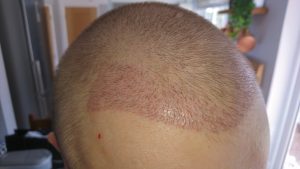

Can Finasteride Be Used After a Hair Transplant? If Finasteride or Propecia were part of your regimen before, you might be pondering their role in halting hair loss after your transplant. This article explores this topic further and answers other pertinent questions.
Yes, you can take Finasteride or Propecia ( the same drug with a different name) after and befire surgery; it prevents further hair loss as it blocks dihydrotestosterone DHT, the hormone responsible for causing baldness.
Should I take Finasteride after a hair transplant?
Do you need to take finasteride after hair transplant? Yes, only if your doctor prescribes it. Your hair transplant surgeon may recommend you take Finasteride before you proceed with hair transplant surgery to help with continued hair loss.
Finasteride blocks DHT, which is responsible for your hair loss. You may need to take Finasteride on a long term basis to get the best results and maintain a full head of hair.
However, once you stop taking Finasteride, DHT will be unblocked, and you can expect to experience some hair fall.
Finasteride does not suit everyone and, in a small percentage of men, can cause erectile dysfunction. ED does seem to be the main side effect, but it is only in a small percentage of men.
Discuss your concerns with your hair transplant surgeon.
Finasteride vs hair transplant
Finasteride and hair transplant are two different treatment options for hair loss.
Finasteride is a medication that is taken orally to help slow down or stop hair loss caused by male pattern baldness. It works by blocking the conversion of testosterone to dihydrotestosterone (DHT), which is believed to be one of the main causes of male pattern baldness. Finasteride can help slow down or stop hair loss, but it may not regrow hair that has already been lost. It’s important to note that finasteride can take several months to show results and it is not suitable for everyone.
A hair transplant, on the other hand, is a surgical procedure that involves moving hair follicles from one area of the scalp (the “donor site”) to a bald or balding area (the “recipient site”). The procedure can be used to restore hair to the scalp, eyebrows, eyelashes, beard, and chest hair. The procedure is permanent, but the transplanted hair will fall out after a few weeks, and typically takes around 3-4 months to start growing again.
Both finasteride and hair transplant can be effective options for treating hair loss, but the best option for you will depend on the type and extent of your hair loss, as well as your personal preferences and goals. It’s best to consult with a healthcare professional, such as a dermatologist or a hair specialist, to determine the best treatment option for you.
Is it OK to use Minoxidil after a hair transplant?
Yes. Your hair transplant surgeon may recommend using Minoxidil post hair transplant surgery. Minoxidil is recognised to increase hair growth speed and be part of your hair transplant protocol.
Some studies show that Minoxidil quickened the growth of grafted hairs.
Something that all hair transplant patients find is hair loss from scalp shock. Minoxidil reduces the chances of shock hair loss.
Shock affects the natural hairs more than the grafts, and shock can cause permanent and temporary hair loss. With Minoxidil, patients can skip hair shock altogether.
Unlike Finasteride. Minoxidil is a topical treatment and does not block DHT. Minoxidil extends the follicle’s growing period, which negates the effects of DHT.
Minoxidil, like Finasteride, was first used for other medical purposes and was discovered to have a side effect of growing thick hair and then taken up by the hair regrowth industry.
Is Minoxidil safe to use? Yes, it’s FDA approved and perfectly safe to use as prescribed by your doctor.
However, it’s not mandatory to use Minoxidil as part of your treatment if you have other preferences.
Is transplanted hair affected by DHT?
No. DHT does not affect the hairs from the back of the head, and the hairs from this area are not sensitive to DHT, a by-product of testosterone.
Once the harvested hairs from the back of your head are grafted into place, they keep their resistance to DHT making transplants surgery one of the best ways to restore hair.
However, if you are addressing a receding hairline with surgery, you may want to take Finasteride to keep the other hairs from falling.
Finasteride will help you keep a full head of hair. However, once you stop taking Finasteride, DHT will become active again.
After a hair transplant, do you want a better chance of regrowth? We look at Finasteride, which effectively prevents hair loss, with some fascinating studies showing exceptional results.
You don’t have to take Finasteride or Propecia before having a hair transplant. Finasteride and Propecia are both effective at supporting hair growth but not a prerequisite for surgery.
What Is Finasteride
Finasteride is a drug that supports the growth of normal hair in men. It is a hormone-based drug that is only available on prescription at the moment.
Most people who live with hair loss know that their hair thins and falls. This is due to a hormone called dihydrotestosterone or commonly known as DHT.
DHT is generated from testosterone and converts in the skin, which is what makes your hair fall out. In men and women, this is the leading cause of hair loss.
Finasteride prevents DHT from synthesising from testosterone and hence prevents hair loss.
How Safe Is Finasteride?
It’s not a new drug, and his history in prostate cancer patients shows promising results.
It has been prescribed by 20,000 doctors worldwide for hair loss and maintenance, and I consider it a safe drug to use. They use the drug themselves and prescribe it to family members.
Can You Get A Hair Transplant Without Propecia?
The simple answer to this question is yes, but why would you want to if you know that Propecia will support new hair growth?
Propecia is the same drug as its generic brother finasteride. It is the only widely available medication to prevent hair loss and focuses on the root causes of male pattern baldness.
Like its generic relative, it targets DHT or the prevention of DHT being produced from testosterone.
Hair Transplant surgeons prescribe Propecia before and after hair transplant surgery to give the best results and the chance of survival to the newly implanted hair follicles.
Propecia has few side effects and is considered to be highly safe to use.
If you object to taking Propecia, the surgeon will discuss your options for a successful outcome of hair regrowth.
But the answer to the question is yes. You can proceed with a hair transplant and expect a good outcome if you adhere to the postoperative care guideline.
Is Propicia and Finasteride Effective?
Studies show that Finasteride and Propecia (the same drug) to be very effective, with hair loss decreasing in 88% of men who have been prescribed the drug.
Interestingly, Finasteride encourages hair regrowth, with the studies reporting that 66 % of all men taking the drug experienced some hair regrowth as DHT was blocked.
In terms of maintenance and the prevention of hair loss, Finasteride proved to be highly effective.
What Happens If I Stop Taking Finasteride?
The results speak for themselves. If you stop taking this drug, then you will resume your hair loss. It takes a little time for the drug to leave your system altogether and be metabolised, but you will experience hair fall again once out of the system.
Finasteride Study
Finasteride was studied for five years and is possibly the most important study of a preventative hair loss drug ever undertaken.
The study was double-blinded to attain accurate results, placebo-controlled and combined 1,553 men.
To evaluate the drug, the study used hair counts, and before and after photos for the investigator assessment, also self-evaluation was used to conduct the study.
- In year five, using a test area of the 1-inch diameter of the scalp, men using Finasteride had 277 more hairs in that diameter than the men in the placebo group.
- Finasteride, 65 % of patients, measured an improvement in hair count or maintained the hair count over the five years.
- Photo analysis concluded that 90% of the study group had not experienced further hair loss than the placebo group, where 25% had further hair loss.
- Doctors found that 77% of men using Finasteride had a marked increase in hair regrowth compared to 15% of men in the placebo group.
Side Effects Of Finasteride
The Finasteride Study showed that a percentage of the men had less libido or sexual drive. This is across a range of ages where men could be considered to be most virile.
The report of not being able to get an erection or maintain an erection has a particular concern in the group of men tested.
For some phantom reason, the same had been reported in men from the placebo group!
After ceasing to take the drug, the side effects vanished.
These side effects should be considered carefully before taking Finasteride or Propecia. For men in a new relationship or starting a family, this drug could have serious consequences.
Some other side effects include cold sweats and chills. Confusion when trying to complete tasks and dizziness.
Allergic reactions have formed part of the extensive list of side effects of this drug.
If you are taking this drug or any other drug and you experience side effects like these, you must seek medical help without delay.
Finasteride Prevents Cancer
A further study into prostate cancer was conducted with this drug over seven years.
Finasteride is prescribed in higher doses to prevent prostate cancer, typically 5mg in comparison to 1mg for the prevention of hair loss.
Nocebo
The term Nocebo effect has come about from clinical trials and is a phenomenon that occurs when a patient expects negative results and side effects from the drug or placebo.
If you tell a group of men in a drug study, there is evidence that specific side effects can occur, such as erectile dysfunction.
A study group reported on by a well known New York paper that the men administered with Finasteride could experience erectile dysfunction. The other group was told nothing, and it was simply a drug trial.
The group informed about the potential for erectile problems developed the side effects at an alarming 445 Of the men. While only 2% of the other group experienced erectile dysfunction.
Don’t get caught in the Nocebo effect!
Should You Take Finasteride For Hair Transplant Surgery?
If you want to achieve the best results from the surgery, it’s a no brainer to take the drug.
Taking the drug will provide you with the best possible outcome for a hair transplant, and for sure, your doctor or surgeon will recommend its use whatever drug name he may choose.
Many factors hamper the progress of your hair transplant, and to have a drug that will remove some of the doubts from your mind as to the successful outcome; then it must be worth taking the drug.
Should you take the drug long term and live with the side effects? For the short term success of what you wish to achieve, then the answer must be yes. However, ultimately the decision will be yours.
Can I Take Finasteride After A Hair Transplant?
Have you taken Finasteride or Propecia? You might be wondering if it still works after a hair transplant to prevent hair loss? This article covers those points and answers some more helpful questions.
Yes, you can take Finasteride or Propecia ( the same drug with a different name) after surgery; it prevents further hair loss as it blocks dihydrotestosterone DHT, the hormone responsible for causing baldness.
Should I take Finasteride after a hair transplant?
Do you need to take finasteride after hair transplant? Yes, only if your doctor prescribes it. Your hair transplant surgeon may recommend you take Finasteride before you proceed with hair transplant surgery to help with continued hair loss.
Finasteride blocks DHT, which is responsible for your hair loss. You may need to take Finasteride on a long term basis to get the best results and maintain a full head of hair.
However, once you stop taking Finasteride, DHT will be unblocked, and you can expect to experience some hair fall.
Finasteride does not suit everyone and, in a small percentage of men, can cause erectile dysfunction. ED does seem to be the main side effect, but it is only in a small percentage of men.
Discuss your concerns with your hair transplant surgeon.