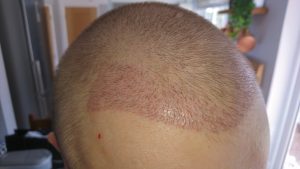
Did being raised with a cowlick breed a sense of aversion in you? Rest assured, you were far from alone, given that a multitude of adults loathe this natural hair swirl on their head.
Hair transplant can help with a cowlick, but it may not completely get rid of it. A hair specialist can advise if it’s possible and if multiple transplants may be needed. Good results are not guaranteed. Consult a specialist before making a decision.
Can you permanently fix a cowlick?
Cowlicks are challenging to deal with, and the best advice is to live with the mess! However, you can do something about reducing the appearance of the cowlick.
You can use gels and hair fixing products to flatten the swirl, they work pretty well, but it’s not a permanent solution by any means.
If you have a good barber, he should thin the cowlick and improve its appearance making the cowlick more acceptable.
If you are considering hair transplant surgery to fix your cowlick, you may be disappointed.
Surgery is the last option any of us should consider, but it’s the only option available to you to correct a cowlick in some cosmetic circumstances.
Unfortunately, this is how your hair grows, and a hair transplant surgeon does not have the techniques to change the directions of hair growth.
The hair transplant surgeon can only remove and replace hairs from your scalp, which will not alter the direction of growth.
How do you get rid of a cowlick in your hair?
With patience and a lot of messing around, you can brush and comb, training the hair growth in another direction! Does it work? You can have limited success if you persevere long enough.
The best results come from the barber thinning the cowlick and then using hair products to flatten the hairs. This renders the cowlick almost invisible without scrutiny.
There is some chatter about using a hot strong hair dryer to force the hairs into a different direction, you know the truth, but you can try if you wish.
Do hair transplants go away?
After hair transplants, it’s still possible for you to continue losing your hair. Within the first six months of a hair transplant, you will lose a percentage of the transplanted hair, this is from scalp shock, and it happens to all transplant patients.
There are new, improved techniques with a higher success rate these days.
What causes cowlick hair?
Nothing causes a cowlick in your hair. It’s inherited; it’s in your genes, so thank your father and grandfathers for your cowlick.
If you look closely at a cowlick, it’s the scalp’s way of distributing hair across the scalp. The cowlick or vertex rotates and pushes the hair to lay flat in any direction the hair is growing in.
By keeping your hair well-groomed with a barber who knows what he is doing, you can reduce the appearance of a cowlick, and with some hair products, you can feel confident.
Cowlick or balding
A cowlick is a tuft of hair that grows in a different direction than the rest of the hair on the scalp, often caused by the growth patterns of the hair follicles in that area. Balding, on the other hand, refers to hair loss that occurs in a specific pattern, often starting at the temples or crown of the head.
A hair transplant can help with both cowlick and balding, but the approach and the outcome will be different. A cowlick is mainly a styling issue, and a hair transplant can help by redistributing hair follicles to the cowlick area. Balding, on the other hand, is a result of hair loss and a hair transplant can help by replacing the lost hair.
Consult a hair specialist or a qualified surgeon who can evaluate your hair loss pattern, and determine if a hair transplant is the best option for you and if it can help your specific case.